KVB
Digital Self Defence
Omni channel Strategy |Outcome-Led Marketing
Designing awareness for all
Digital fraud does not discriminate. A street vendor, a homemaker, a student or an entrepreneur are equally vulnerable.
Recognizing this, Karur Vysya Bank (KVB), one of South India's oldest legacy banks approached Madarth for a cyber security awareness campaign. They already had safety initiatives in place, but we saw an opportunity to take the brief a step further. We didn't just want to talk to people about risks; we wanted to give them the tools to handle them. The goal was to move past basic awareness and create something that actually gives people the confidence to stand their ground.
We focused on real behavioral change. That meant simple language, familiar formats, and communication that works for everyone from bustling Tier 1 cities to the grassroots of semi-urban and rural regions.
We picked Tiruchirappalli as our focus. It offered the perfect mix of scale and diversity to see if our message could truly travel across different communities.
Simplifying learning into four rules
Scams change, but the tricks stay the same. Our research showed that while technology evolves, the emotional triggers, urgency, misplaced trust and confusion are identical across almost every fraud.
This insight led us to four fundamental rules that are a permanent shield against the majority of cyber threats, no matter how clever the scams get in the future.
These rules became the heartbeat of the campaign. Instead of drowning people in technical jargon, we gave them a clear, memorable reference. The intent was to shift the narrative from caution to confidence. By giving people a dependable framework, we were effectively passing the baton back to the public and empowering them.
Building trust through identity and recall
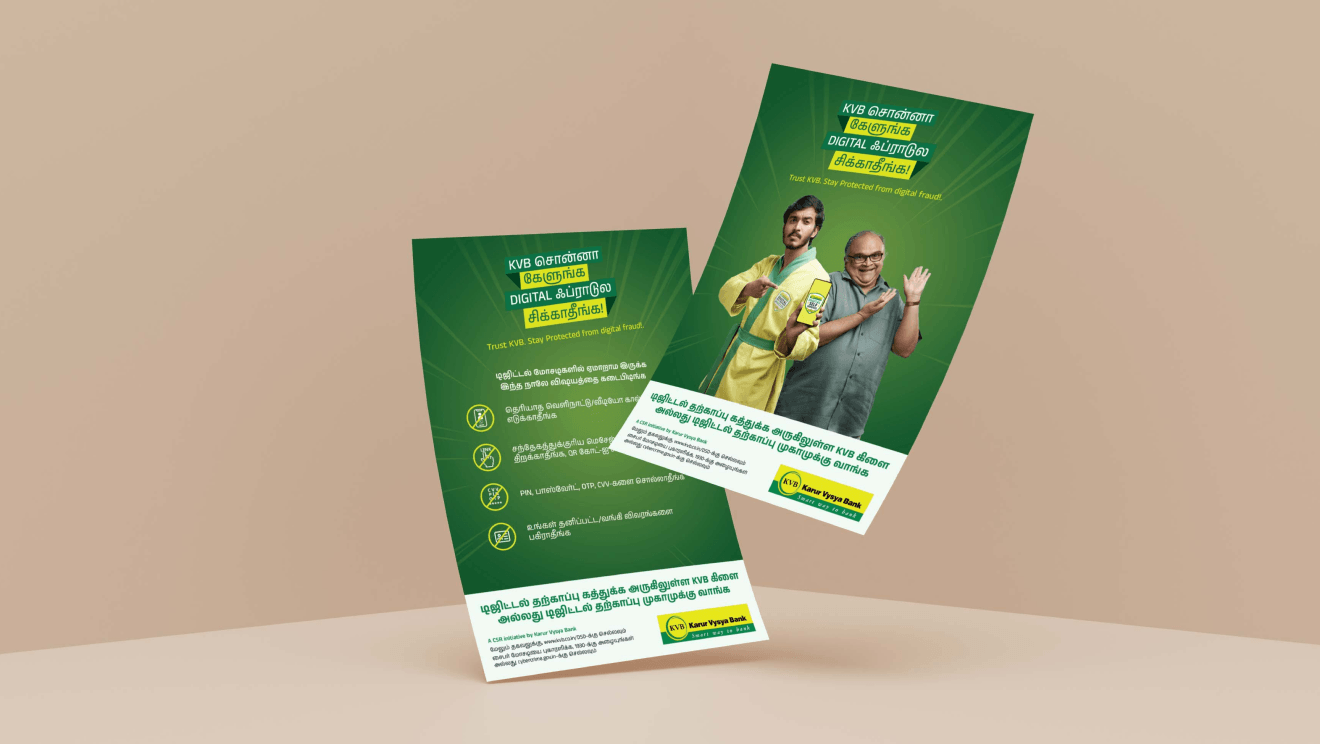
To make the four rules stick Madarth introduced the line: “KVB sonna kelunga, digital fraud-la sikkadheenga.”
KVB carries immense legacy trust. We leaned into this by positioning the bank as a wise elder or a trusted friend. The shift was crucial because it turned the advice into a warm personal recommendation rather than a cold corporate legal disclaimer.
The idea was then expanded into KVB Digital Self Defence and framed digital safety as a practical life skill that anyone can learn and share. To make it visually hit home we created Digital Self Defence Masters as the face of the campaign. Drawing from martial arts we used karate inspired avatars and symbolic gestures to show that being protected is about being prepared and in control.
Communicating through familiar media environments
KVB's fraud data identified investment scams and OTP fraud as the biggest threats. We addressed these scenarios through television commercials built around everyday situations people could recognise.
The storytelling focused on realistic decision making moments instead of exaggerated fear driven messaging. Two films demonstrated how following the four rules helps individuals stay protected. By portraying relatable characters and familiar environments the films allowed viewers to see themselves in the situations and understand how small decisions prevent larger losses.
The campaign extended across television, theatres, OTT platforms, YouTube, cable TV, radio, newspaper advertising and outdoor media including bus shelters and bus branding. Concentrating the communication within Tiruchirappalli ensured consistent visibility across daily consumer routines and allowed the message to become familiar through repetition.

Transforming branches into learning spaces
The campaign moved deep into KVB branches to start real conversations. More than 400 employees were trained across 23 locations to help customers recognize and deal with fraud. We designed the experience to make sure the message was actually processed and not just seen. Visitors were shown real life situations and then took a 15-question assessment to test what they learned.
Passing this assessment was a big moment. It turned people from potential victims into Digital Self Defence Masters. This recognition gave them the genuine confidence to handle digital threats. They left with campaign kits like booklets and badges that showed off their new status. Items like notebooks and umbrellas helped carry this authority into their homes and local markets. These new Masters became leaders in their own neighborhoods and helped the message travel way beyond the bank walls.


Taking learning into everyday community spaces
To truly make a difference, we knew the campaign had to go beyond the four walls of the bank and move straight into the grassroots. We took the learning into rural villages and public spaces because that is where the most vulnerable conversations happen every day. By reaching people from the ground up, we weren't just sharing information, we were giving them the tools to become Digital Self Defence Masters.
In schools and colleges, workshops and quizzes helped younger audiences recognise cyber risks early on. We also held community sessions that encouraged open discussions around real fraud experiences. These allowed people to learn from shared stories and practical demonstrations rather than just reading a list of rules. For senior citizens, the focus was on clarity and reassurance to guide them through situations where fraud attempts often create confusion or hesitation. In rural areas, street plays became the heart of the campaign. By using local storytelling, these performances recreated everyday situations audiences had already encountered and showed them exactly how to take control. This turned digital safety into a shared community movement where everyone felt empowered to protect themselves and their neighbours as newly trained Masters.
Extending participation through digital platforms
To make sure we reached every possible touchpoint, we used digital platforms to amplify the message and connect with a much wider audience. We created 15 explainer videos that acted like mini rehearsals for real life fraud. These videos recreated common scams and demonstrated exactly how to use the four-rule framework to shut them down. By keeping the tone practical and easy to follow, we ensured the content stayed approachable and gave people the confidence to act.
Just like the physical assessments we held in branches and at community events, we wanted the digital experience to be just as active. We guided people toward a dedicated landing page where they could put their knowledge to the test. This allowed anyone to take the assessment and earn their certification as a Digital Self Defence Master, making sure the journey to mastery was available to everyone with a phone.
Police Impersonation Scam

Customs or Parcel Fraud
Emergency Family Scam
Mistaken Refund Scam
Airline Ticket Scam
Investment Scam
Part-time Job Scam
Investment or Trading Scam
KYC Update Fraud
Deepfake Investment Scam
Insurance Claim Fraud
Fake Recruitment Scam
B2B Supplier Advance Scam
Impersonation Call Scam
Crypto via Acquaintance Scam
Impact through empowerment
Digital Self Defence focused on behavioural impact rather than visibility alone. By simplifying fraud prevention into a few simple rules, we helped customers take real ownership of their safety. This strategy worked across every touchpoint, from branch visits and street plays to social media videos, giving people a practical way to fight back.
The message moved beyond the bank and into the national spotlight, with coverage in 29 major publications like The Hindu and various CSR platforms. Influencers and participants also took the lead, sharing their own stories and strengthening the credibility of the movement.
The results show the scale of this shift. We engaged over 30,000 people on the ground, performed 90 street plays in local hotspots, and reached over 1 crore people digitally. The outdoor campaign generated 4 crore impressions, while influencer collaborations brought the message to another 8.7 lakh viewers. These efforts strengthened the bond between Karur Vysya Bank and its customers, creating a community of Masters who now carry this awareness forward independently.
How Madarth turned awareness into a community movement
As customers learned the four rules and completed their training, the campaign began to spread organically. Participants didn't just keep the knowledge to themselves; they shared their learning with family members, friends and neighbours.
This strategy turned individual lessons into a ripple effect that travelled through conversations, households and entire communities. By empowering people to act as experts, Madarth helped the message extend far beyond the initial campaign touchpoints. Digital safety stopped being a bank instruction and became a shared responsibility that people carried forward into their daily lives.
Creating a lasting model for digital safety
Digital Self Defence proved that the real way to beat fraud is through clarity, repetition, and being a part of everyday life. By sticking to simplicity and making it accessible to everyone, we built an initiative for KVB that actually lives on through the people. Madarth shaped this approach to ensure we weren't just passing on information, but truly empowering people to take charge of their own security. It allows awareness to move way beyond a standard campaign and evolve into a long-term habit where the community feels like masters of their own digital safety.